By Murtala Muhammad
The need for greater social inclusion in policymaking and economic decisions dominated discussions at this year’s World Population Day commemoration in Bauchi, with the theme “Empowering Young People to Create the Families They Want in a Fair and Hopeful World”.
Organised by the Bauchi State Ministry of Budget, Economic Planning, and Multilateral Coordination in partnership with the United Nations Population Fund (UNFPA), the event drew a diverse gathering, including students from tertiary institutions across the state capital.
Panellists, comprising youth leaders and persons with disabilities (PWDs) urged policymakers to move beyond tokenistic engagement and recognise their potential as drivers of sustainable development.
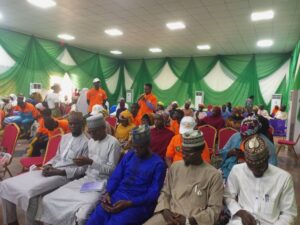
The discussion, held at the Government House Banquet Hall, highlighted frustrations over being marginalised in decision-making spaces despite their demographic significance.
Akibu Ahmed, a youth visually impaired lecturer at Adamu Tafawa Balewa College of Education, Kangere, who underscored the persistent barriers facing PWDs, saying “Discrimination remains a roadblock to achieving SDG 10 on reduced inequalities,” noted that societal misconceptions often eclipse the talents and contributions of disabled individuals.
Rex Stephen, a youth advocate, frowned at the disconnect between Nigeria’s tech-savvy young population and their limited involvement in governance.
“We are the majority, yet treated as bystanders in policies shaping our future,” he asserted.
A Girl-child education advocate, Asmau Yero Ahmed emphasised the need for menstrual hygiene awareness and digital literacy initiatives, noting that open conversations and access to technology can unlock opportunities for girls.
Students’ Union Government Presidents from Abubakar Tafawa Balewa University and the Federal Polytechnic Bauchi condemned elitist narratives that reduce youths to political thugs, saying their energy and ideas are assets, not liabilities.