By Murtala Muhammad
Malnutrition, poor antenatal care attendance, hospital-based delivery and post natal care have been identified as some of the major challenges of maternal and child healthcare in Bauchi state.
Some male parents due to socio-economic and cultural reasons deny their spouses access to positive healthcare and other life-saving practices.
These however began to change following the establishment of volunteer community resource groups, such as Mama2Mama and Fathers for Good Health in some local government areas of the state.
The volunteers used a new approach, where they interpersonally communicat with spouses aimed at persuading them on the need to embrace positive health practices
These practices are antenatal care attendance, hospital based delivery with trained personnel, postnatal care attendance and children’s access to Routine Immunisation.
Journalists in Bauchi state including Radio Nigeria Correspondent embarked on an assessment tour to the Jama’are local government area where Mama2Mama and Fathers for Good Health volunteers were engaged.
The assessment tour was to examine the impact is the United States government’s grant to the Bauchi state government through the United Nations Children’s Fund (UNICEF), Bauchi Field Office aimed at Preventing Malnutrition among children in their First One Thousand Days.
The first one thousand days of life, spanning from conception to baby’s second birthday, is a critical period where healthy dieting is recommended for the mother, particularly during antenatal, and for the baby after their first six months.
It enables the mother’s body to provide the required amount of nutrients for the fetus while pregnant and enough breast milk after birth.
Immediately after birthday, experts say the baby should be fed with the yellowish mother’s breast, the Colostrum and continue with exclusive breastfeeding for the first six months, afterwhich complementary feeding would be introduced.
Exclusive breastfeeding plays a vital role in baby’s brain development, protecting them from common child illnesses such as diarrhea and cholera, while full immunised children get protected from measles, diarrhea and other serious illnesses.
In Jama’are Local Government Area of Bauchi state, one of the ten LGAs where Mama2Mama and Fathers for Good Health operate, are making a significant difference in changing negative health practices that often lead to maternal and child deaths.
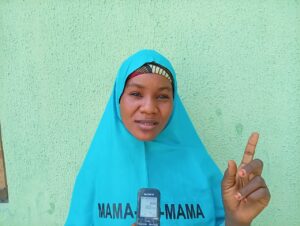
A volunteer, Ummukurthum Aliyu, who move door to door, sensitising women folks on the importance of positive health practices said the new approach had changed the perceptions of many women in the area.
She said “the women now attend antenatal care, embrace hospital delivery with skilled birth attendant and take their children to routine immunisation centres for services.”
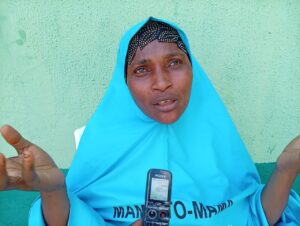
Fatima Muhammad Gainako who expressed optimism that the state’s negative health indicators would witness noticeable improvement in future surveys, pledged to sustain awareness creation on preventing malnutrition in the first one thousand days.
Executive Chairman of the State Primary Health Care Board, Dr Rilwanu Mohammed acknowledged the roles being played by volunteer resource groups in changing health care narrative across the state.
Dr Mohammed applauded the intervention of the United States government through the Bauchi Field Office of UNICEF Nigeria, assuring sustained partnership for improved healthcare of citizens.
In an interview on the US government’s grant to the Bauchi State government, the UNICEF’s Nutrition Specialist, Mrs Philomena Irene said over forty thousand children of six to 23 months, have been supported with Small Quantity Lipid-based Nutrient Supplements (SQ-LNS).
SQ-LNS are nutrient-dense food pastes packed in small 20-gram sachets designed to prevent early childhood malnutrition.
Mrs Irene said under the intervention, over six thousand Mama2Mama and Fathers for Good Health volunteers were trained for the provision of public health messaging on prevention of malnutrition and other support around the first one thousand days.
“With the support from the US government, we’ve trained over fifty healthcare workers on the provision of SQ-LNS, strengthen logistics information management system, strengthen the district health Information management system” – she said.
According to her, nutrition committees at the local government level were strengthened for them to be in the forefront in providing borth sensitive and specific nutrition interventions.